5 min readCouples & Communication
Also available in: Español
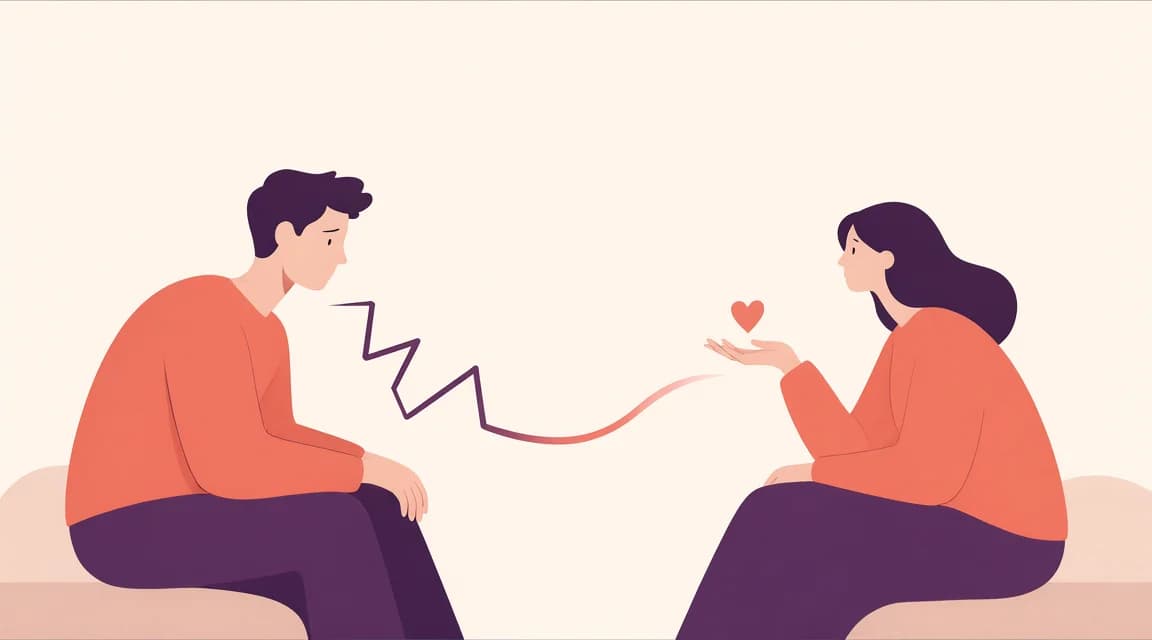
Jealousy is the most lied-about emotion in couples. The person feeling it usually hides it out of shame (“how childish am I”), and the person receiving it usually responds with the two strategies that make everything worse: endless justifying, or shutting the topic down with a “don’t be silly.” Both extremes feed the cycle. The first turns every conversation into a trial; the second teaches the person who’s hurting to never ask for anything again.
There’s a way out, and it starts with a distinction almost nobody makes: the jealous partner isn’t the problem, and the partner with friends isn’t the villain. The problem is the cycle — trigger, catastrophic interpretation, checking behavior, brief relief, more anxiety. Breaking the cycle can be learned. This is the protocol.
Feeling jealous occasionally is human: it appears at a perceived threat to the bond, and in small doses it even informs you (something isn’t covered between you). It’s functional when: it’s proportional, it gets talked about, and it fades when there’s clarity.
It stops being normal when:
If you recognize yourself on the watching side: you’re not a bad person, but you are building a cage you’re both hostages to. And if you recognize yourself on the watched side and have been adapting (“after all, it’s because they love me”): that has a different name, and it’s in the toxic relationship signs guide linked at the end.
For 2 weeks, every jealousy spike: what happened, what you interpreted, how much pain (0-10). In two weeks you’ll see the pattern: it’s almost always 2-3 fixed triggers (no reply, outings with X, the tone of the text), not a thousand real threats.
Not: “Who were you with?” Yes: “When you don’t hear from me for hours, my brain plays an ugly movie and I feel awful. I’m not asking you to justify yourself: I’m asking you to ping me if you’re going to be off the grid.” Sentences like that ask for concrete behaviors, not confessions.
Build 3-4 ground rules together that cover your triggers: flag plan changes, hide nothing relevant (not: share everything), what counts as flirting for each of you, what the rules are with exes. The rules are set by the couple, not by one person’s fear.
When the spike hits: check nothing for 30 minutes (the wave breaks on its own: 10-20 minutes). Meanwhile, one fixed behavior (walk, shower, call a friend). Repeated 20 times, your brain learns that the absence of checking brings no catastrophe. That’s how the alarm gets deactivated: with data, not arguments.
If you’ve run the protocol for months with no progress, if the jealousy comes from a betrayal you couldn’t process, or if there’s control or aggression on either side: therapy. Individual for the jealousy cycle; couples work for the agreements. Online therapy (BetterHelp and equivalents, a market already worth nearly twelve billion dollars a year) made this accessible for people who’d never have started otherwise. And if the root is a current relationship with monitoring and isolation, read that first: it’s not a jealousy problem, it’s a relationship problem.
No. It’s proof of fear. Love is demonstrated with built trust, not demonstrated anxiety. If someone sells you “they’re jealous because I matter to them,” remember: abusers also control “because they love you.”
Honesty isn’t total transparency. You can acknowledge a passing attraction (“I found them attractive”) without turning every flicker into an event. What does get told: what’s turning into something.
Trust rebuilding exists, but it needs two things: the person who broke the agreement repairs it with patience and consistency (not “it’s over, get over it”), and the person who was hurt gets help for betrayal grief. Without both, it’s a loop.
This pairs with understanding what stage your relationship is in: infatuation vs love. And to tell jealousy apart from control: signs of a toxic relationship.