4 min readBreakup & Recovery
Also available in: Español
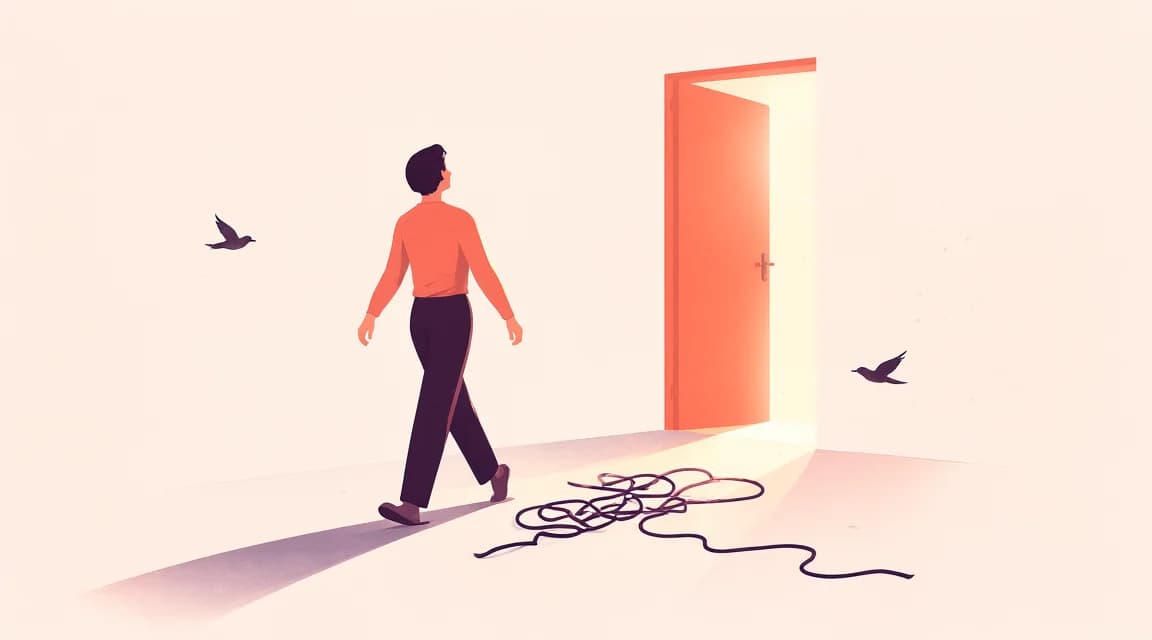
Leaving a toxic relationship isn’t an act of willpower you perform on Monday morning. It’s a process with logistics, with fear, and — most importantly — with a neurochemical trap working against you: intermittency. If your relationship has been a rollercoaster of rewards and punishments, your brain is addicted to hope the way a gambler is addicted to the slot machine. You’re not weak: you’re in withdrawal.
That changes the approach. “Just leave” doesn’t work. What works is a plan: decisions made in advance, real support around you, and logistics sorted before the emotional moment. Therapists who work with this agree: the exit is prepared cold and executed hot — never the other way around.
Between half and two-thirds of exits from relationships with damaging dynamics include at least one temporary return. That’s not failure: it’s part of the process. The difference between people who leave and people who don’t isn’t willpower: it’s what you do during the relapse. A rule written and saved in your phone: “if I feel the urge to go back, I read my list of signs and wait 72 hours. If I still feel it at 72 hours, I call [trusted person] before acting.”
None of these get fixed with more patience. They get fixed with distance.
They can, and sometimes they do. But real change is demonstrated with months of sustained behavior (usually with their own therapy, not you as their therapist). Your job isn’t to audit their change from the inside: it’s to leave and let them prove it from the outside, without you as hostage.
Once, briefly. You don’t owe a defense of your decision: a detailed explanation in a toxic relationship is a debate where they’re both player and judge. “It hurts me and I’m leaving” is a complete sentence.
Loneliness hurts; intermittency destroys. The first 30 days are hard and they pass. What doesn’t pass on its own is the damage of years spent adjusting to someone: that needs support (therapy, a group, trusted people), and online therapy is a very reasonable door to start through.
To confirm what you feel with a cold checklist: signs of a toxic relationship. And for what comes after: how to get over a breakup, step by step.